|
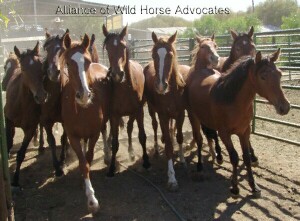
Issue: The sale of Virginia Range Horses removed from Lockwood
Priority: NORMAL
Status: Concluded Incident / Informational
Date: January 5, 2012
This feature is a continuation from
Lockwood Horses Released in Sanctuary.
Nevada is a brand control state. When anyone sells, gives away or otherwise exchanges livestock, the livestock must be inspected for brands and a proper brand inspection clearance certificate must be issued before the state recognizes the transfer. The idea here is to prevent theft of livestock and to be able to track food animals. Nobody is exempt from this requirement, including the Nevada Department of Agriculture.
The paperwork trail on the Lockwood horses is unbelievably incorrect, as shown below. (This paperwork was generated by the agency that is supposed to police such inspections and documents.)
First is the "estray" notice published by the Department. Aside from some fundamental problems with this notice (NRS 569.070 mandates that the department publish a "Notice of Estray," not a "Notice of Sale," for estray animals,) the notice clearly describes the band stallion, four mares and three fillies.
Descriptions sent out by the department's Division of Livestock Identification also described the band stallion, four mares and three fillies.
Note that the horses were freezemarked and were supposed to have been microchipped by the department prior to sale so they would have been handling the horses and should know what they have.
As shown in the previous web document, what the allies actually received were the band stallion (apparently gelded,) three mares and four foals, the majority appearing to be fillies. However the sale paperwork described three geldings and five mares with no brands. Furthermore only six of the eight auction tags were listed on the paperwork and on the brand certificate. One tag number was missing and tag number 9365 was issued to two different horses, a "gelding" and a "mare."
The brand inspector corrected the matter of the missing brands but the horse descriptions remained incorrect, the estray numbers (that could be correlated to the microchips) were missing and this brand clearance certificate could be used for almost any horses of ordinary size and color.
The laws of Nevada are specific. The Department is required to properly advertise "estray animals" that are picked up. Aside from the heading of the estray notice being incorrect, their confusing a 300 Lb. weanling as being an 800 Lb. 4 year old mare is incomprehensible.
Legally the Virginia Range horses are "feral livestock." They are to be advertised, placed or sold under the provisions NRS 569.075, not NRS 569.070 as indicated in the advertisement.
Legally the horses are to be given individual animal identification when sold. The state ID numbers were never indicated and the numbers on the paperwork did not match the horses.
The bill of sale did not match the horses.
The brand inspection clearance certificate did not match the horses.
There were additional problems associated with this paperwork but these are the highlights that are illustrative of the incompetence that is produced when a state agency runs outside the law. We believe we did take possession of the Lockwood horses but the way this department is run, who really knows?
|